


After-School Restraint Collapse: Why Your Sweet Kid Falls Apart the Second They Get Home
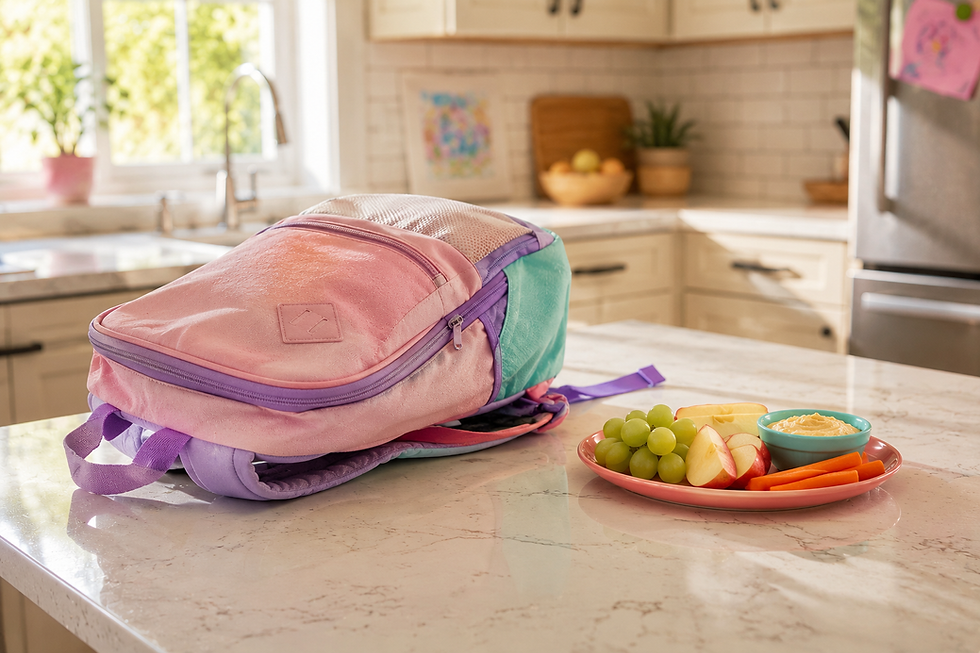
You pick your kid up and every report says the day went fine. They followed the rules, they shared, they used their inside voice. Then the car door closes, or the front door opens, and they come completely undone. Tears over the wrong colored cup. Fury over a sock seam. A meltdown that seems to land out of a clear blue sky.
Here is the first thing I want you to hear. You are not doing anything wrong. This particular meltdown is actually a strange kind of compliment.
What After-School Restraint Collapse Actually Is
This has a name, and once you know it, your whole afternoon makes more sense. It is called after-school restraint collapse, a term the parenting educator Andrea Loewen Nair helped put on the map. The idea is simple and a little heartbreaking.
All day long, your child is holding it together. Sitting still when they want to move. Raising a hand when they want to shout the answer. Waiting their turn, sharing the markers, managing big feelings in a room full of other kids who are also managing big feelings. Self-control is not free. It runs on a battery, and a small child drains the whole thing by the last bell.
So they spend the entire day being their most composed self for teachers and classmates. And then they walk up to the one person they trust most in the world, and they finally let go. The psychologist Vanessa Lapointe writes about children needing a safe harbor to fall apart in. That harbor is you. The meltdown is not evidence that you are failing. It is evidence that you are the safest place they have.
What to Do at 3:15, Before the Meltdown Even Starts
The best time to handle restraint collapse is before it erupts, in the first twenty minutes after you are back together. Here is the mechanism.
Lead with connection, not questions. The instinct is to greet them with a checklist. How was your day, did you eat your lunch, do you have homework, where is your water bottle. To a depleted kid, that lineup is one more demand on an empty battery. Try a warm, low-pressure hello instead. A hug. “I'm so happy to see you.” The debrief can come later, once the tank has a little charge back in it.
Feed them before you talk to them. So much of the after-school storm is just low blood sugar wearing a costume. Have a snack and water ready to go, ideally the moment they land. You can solve a shocking number of meltdowns with a handful of crackers and ten quiet minutes.
Protect the decompression window. Resist the urge to rush straight from pickup into homework, practice, and errands. Even fifteen minutes of nothing in particular, a book, a couch, a stretch of staring out the window, lets the nervous system come down for a landing before the next thing begins.
Move the body. For a lot of kids, the fastest reset is physical. A run in the yard, a bike loop, a few minutes at the park. Big feelings get stored in the body, and movement is how they come out.
Be the calm they borrow. Children co-regulate, which is a fancy way of saying they catch your state like a cold. Meet a storm with your own frustration and you double it. Stay steady and low and warm, and you hand them something solid to hold onto. You do not have to fix the feeling. You just have to not add to it.
What Not to Do in the Middle of It
A few things quietly make restraint collapse worse, and they are all completely understandable.
Do not pile on demands the second they arrive. The transition itself is the hard part. Stack chores and questions and instructions on top of it and you have built a meltdown on purpose without meaning to.
Do not take it personally. It is so easy to read the after-school grump as ingratitude, or as a verdict on your parenting. It is neither. It is the release valve of a kid who trusts you. Try to receive it as the compliment it secretly is.
Do not try to teach in the storm. The middle of a meltdown is the worst possible classroom. Nobody absorbs a lesson about manners or attitude while their nervous system is underwater. Connect first. The teaching comes later.
Teaching the Skill for Later, When Everyone Is Calm
This is the part I care about most, because riding out the meltdown is only half the job. The other half is quietly building your child's ability to name what is happening to them.
Later, once the storm has passed and everyone has eaten, you can put words to it. “You know how sometimes you hold everything in all day at school, and then it all comes out when you get home? That is a real thing, and it happens to grownups too.” Giving a child the vocabulary for their own inner weather is one of the most useful things you will ever do.
Over time, “I think I'm having a hard-afternoon feeling” starts to replace the scream. That is emotional regulation, and it is a learned skill, not a lucky personality trait.
A Word for the Homeschool Families
Restraint collapse is not only a school-building phenomenon. A long co-op day, a hard morning of lessons, a birthday party, an afternoon of errands where your child had to be patient and polite the entire time. Any stretch where a kid held it together can end in the same release once they feel safe again. Watch for the pattern, not the location.
Try One This Week
Pick one thing to change about the first twenty minutes. Have the snack ready before you even leave for pickup. Trade your usual questions for a hug and a hello. Build in a nothing window before homework. Just one.
The after-school meltdown is not a behavior problem to punish. It is a tired kid, out of battery, finally safe enough to fall apart. When you meet it with a snack, a soft landing, and a calm face, you are not only surviving the afternoon. You are teaching your child what a safe person looks like.
Helping kids understand and name their own emotions is woven all through Magic Manners, our done-for-you curriculum for kindergarten through fifth grade, and it is something we practice in real time in the Private Family Etiquette Experience. If you want the full version for your classroom or your family, come find me.
Warmly,
Nicole

Comments